

How does a furniture gas spring work?
Dec 18, 2025
Hey there! As a furniture gas spring supplier, I often get asked about how these nifty little devices work. So, I thought I'd take a few minutes to break it down for you in a way that's easy to understand.
Let's start with the basics. A furniture gas spring is a type of mechanical device that uses compressed gas to provide force and support. It's commonly used in furniture applications, like chairs, cabinets, and beds, to make them easier to open, close, and adjust.

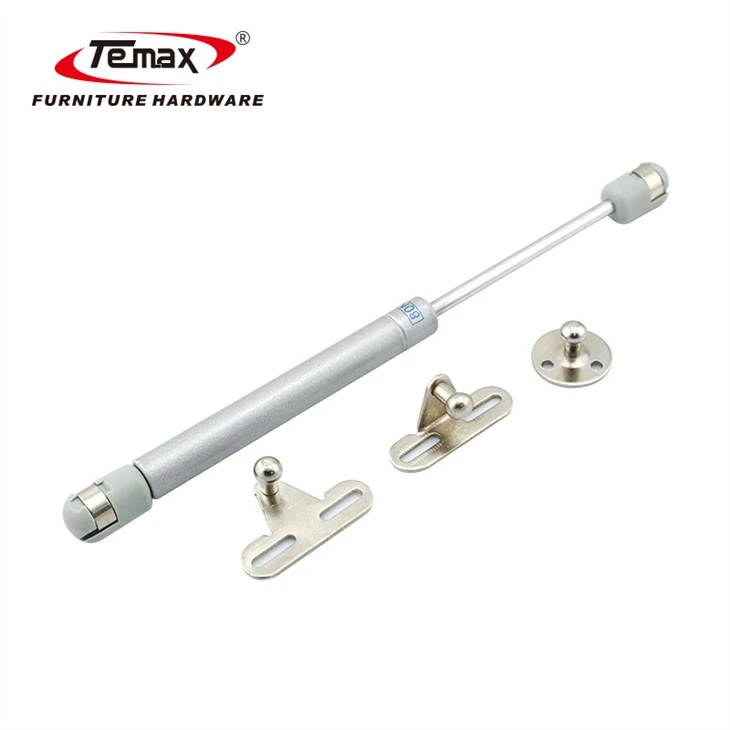
The main components of a furniture gas spring include a cylinder, a piston rod, a piston, and a valve. The cylinder is a sealed tube that contains the compressed gas, usually nitrogen. The piston rod is a long, thin rod that extends from the cylinder and is attached to the moving part of the furniture. The piston is a disc-shaped component that fits inside the cylinder and divides it into two chambers. The valve is a small opening in the piston that allows the gas to flow between the two chambers.
So, how does it all work? When you apply a force to the piston rod, it pushes the piston into the cylinder. This compresses the gas in the chamber behind the piston, increasing its pressure. The increased pressure creates a force that pushes the piston rod back out of the cylinder, providing support and resistance.
The amount of force provided by the gas spring depends on several factors, including the size of the cylinder, the pressure of the gas, and the position of the piston. By adjusting these factors, we can customize the gas spring to meet the specific needs of each application.
One of the key advantages of using a furniture gas spring is its ability to provide smooth and consistent motion. Unlike traditional mechanical springs, which can be prone to sticking or bouncing, gas springs offer a more controlled and predictable movement. This makes them ideal for applications where precision and reliability are important.
Another advantage of gas springs is their durability. Because they use compressed gas instead of metal coils, they are less likely to wear out or break over time. This means that furniture equipped with gas springs can last longer and require less maintenance.
Now, let's take a look at some of the different types of furniture gas springs available. One popular option is the Gas Spring Heavy Duty. As the name suggests, these gas springs are designed to handle heavier loads and provide more support. They are commonly used in applications like industrial chairs, heavy-duty cabinets, and large beds.
Another option is the Gas Spring 100n. These gas springs are designed to provide a specific amount of force, in this case, 100 newtons. They are often used in applications where a precise amount of support is required, such as in adjustable desks or small cabinets.
Finally, we have the Gas Spring for Kitchen. These gas springs are specifically designed for use in kitchen cabinets and drawers. They are typically smaller and more compact than other types of gas springs, making them ideal for tight spaces. They also offer a smooth and quiet operation, which is important in a kitchen environment.
So, there you have it! That's a basic overview of how a furniture gas spring works. I hope this article has been helpful in understanding the technology behind these amazing devices.
If you're in the market for furniture gas springs, I encourage you to get in touch with us. We offer a wide range of gas springs to meet the needs of any application, and our team of experts can help you choose the right one for your project. Whether you're a furniture manufacturer, a DIY enthusiast, or just looking to upgrade your existing furniture, we're here to help.
Thanks for reading, and I look forward to hearing from you soon!
References
- "Gas Springs: How They Work and Their Applications." Engineering.com, 2023.
- "Furniture Gas Springs: A Comprehensive Guide." Furniture Today, 2023.